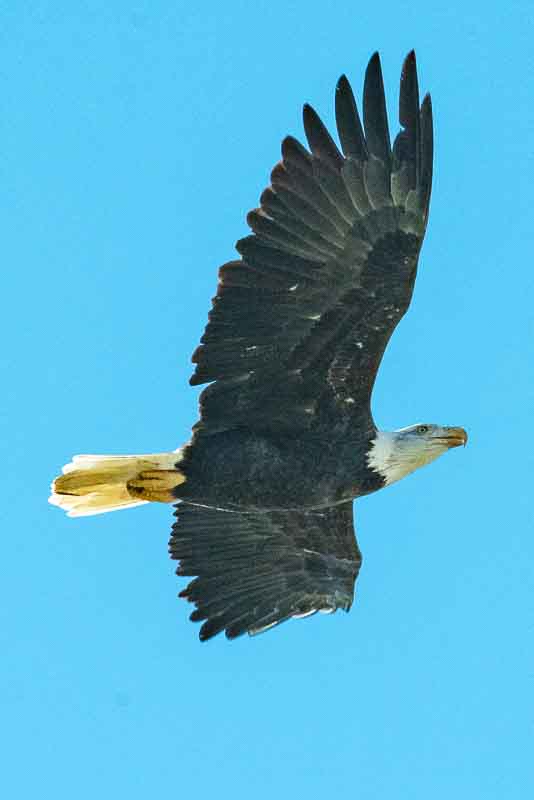
While attention has been focused on other affairs in Washington this past week, the Government of the United States has been quietly rolling out changes to environmental protection policy. At the end of January, the Government was expected to make official a policy dramatically limiting the federal government’s authority to hold industry accountable for killing birds under one of the nation’s oldest conservation laws, the Migratory Bird Treaty Act. A proposed rule will eliminate this Act’s prohibition on the killing or taking of migratory birds by industrial activities. Each year hundreds of thousands of birds are killed by pesticides or in tailing ponds at mines or around oil wells, when they collide with buildings, wind turbines or communication towers, or when critical habitat such as wetlands or grasslands are destroyed. The Migratory Bird Treaty Act has been the most important tool to address these important but otherwise unregulated sources of mortality. This protection has now been reduced to only apply to cases where the killing of birds is the specific intent of the deeds that resulted in mortality. Negligence, collateral damage, incompetence and cost savings are now acceptable reasons for minor and mass killings of migratory birds. This is the Act that was used to fine BP for killing an estimated one million birds with the Deepwater Horizon oil spill. The Migratory Bird Treaty has been in place for over 100 years. This follows on the heels of rollbacks to the protections offered by the Endangered Species Act of 1973, which occurred in 2019. This act, introduced by the Nixon administration, is credited with saving such species as the bald eagle, peregrine falcon, whooping crane and the grizzly bear in its range in the United States. The approach of the present American Government would suggest that there is little to worry about with respect to species at risk, as legislative protections have been removed, protected areas eliminated, pollution standards relaxed and concerns regarding newly identified toxins are being tossed aside. Facts do not support this conclusion however. The total population of birds in North America has been reduced by about 29% since 1970. To state this another way, North America has about 3 billion fewer birds today than it did in 1970. This decline is not evenly spread out amongst all species, and many species are in severe decline and are threatened. The beneficiaries of these actions are a relatively small number of businesses and “developers”, who have no concern or understanding of the concepts of stewardship or sustainability. It is a very good thing that the present approach has not been the approach since 1970, or the reduction in bird population would be far greater than 29% and many of the species that were threatened (such as the bald eagle, peregrine falcon, whooping crane, Kirtland’s warbler etc.) would now be extinct. When will responsibility return? With all the discussion of sustainability in the public domain today, it is depressing to see such regressive governmental actions.